

- Date:
- 23 June 2026
A message from the Victorian Government Solicitor
I am pleased to share with you VGSO's 2026-2030 Gender Equality Action Plan (GEAP). Our GEAP has been endorsed by our Executive Leadership Team (ELT) and represents our commitment to gender equality.
VGSO takes great pride in acknowledging and celebrating the diversity of our workforce. Since its establishment almost 10 years ago, our Diversity and Inclusion Committee, with support from ELT and our People and Culture team, have played a valuable role initiating and leading critical initiatives that support our people to participate fully and thrive at work. I am honoured to work with this Committee, as Executive Sponsor, and am grateful for the contributions and commitment of all its members.
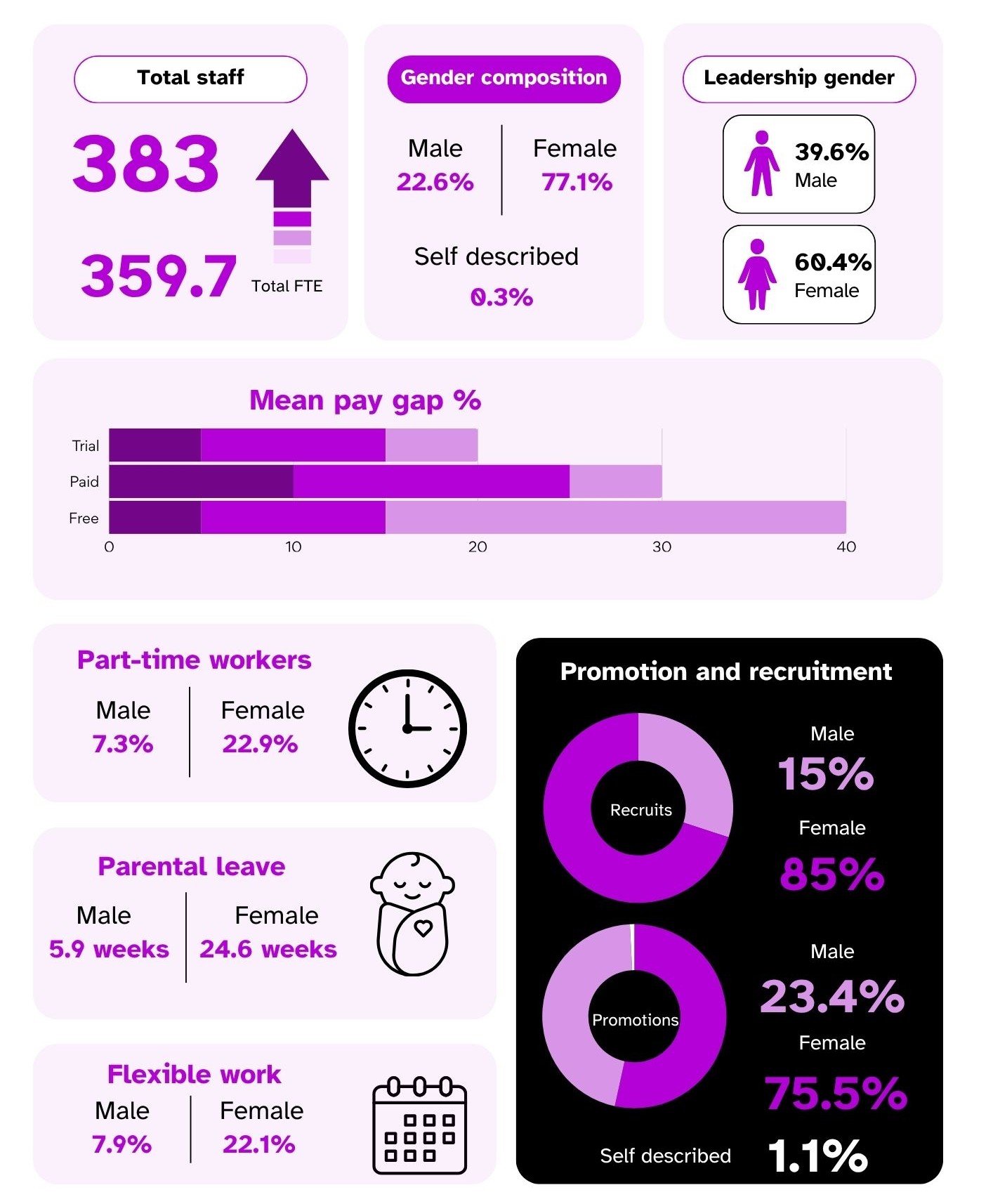
With 77% of our workforce being women, we acknowledge the importance of ensuring our workplace is free of gender inequality. In 2022, VGSO welcomed the opportunity to prepare its first GEAP, with the successful delivery of initiatives resulting in positive and meaningful change in our workplace, particularly in supporting equitable pay outcomes and mitigating gender-based pay disparities in recruitment. The preparation of our 2026-2030 GEAP has encouraged valuable reflection on our progress and encouraged us to identify ways we can further enhance our commitment to building and nurturing a diverse and inclusive workplace culture.
Our 2026-2030 GEAP reflects both the findings from our workplace gender audit and employee-identified priorities. In developing this GEAP we relished the opportunity to engage with our people, understand their experiences and ultimately develop priorities and actions that will positively impact their workplace experiences.
We have set clear, achievable actions structured around three priority focus areas:
- Fair, equitable and bias-resistant workforce systems: embedding gender equality into hiring, pay, promotion and development processes
- Accountability, ownership and visible progress: making gender equality everyone's responsibility through clear expectations and transparent reporting
- Culture, inclusion and sustainable work across all life stages
Our vision is a workplace where gender equity is embedded in every system, championed at every level, and experienced by every person - across all identities and all stages of working life.
In a broader sense, VGSO acknowledges gender equality as a human right, a precondition for the prevention of family violence and other forms of violence against women and girls and essential for an economically prosperous, safe and healthy society.
I, along with VGSO's ELT, fully endorse the actions within our GEAP and recognise the significant opportunities identified to further embed a gender equitable workplace culture at VGSO.
Matthew Hocking
Victorian Government Solicitor
Planning and consultation
Our audit data
The insights presented in this section are drawn from VGSO’s most recent workplace gender audit, conducted in line with the Gender Equality Act 2020 and the Gender Equality Amendment Regulations 2023, which require Victorian public sector organisations to complete a gender audit every two years.
This audit informs our obligations under the Act, including the development of our Gender Equality Action Plan (GEAP) and reporting on progress across the seven workplace gender equality indicators.
The data in this infographic covers the period 1 July 2024 to 30 June 2025 and is based on two key sources:
- Workforce data drawn from internal systems and DJCS data collection processes
- Employee experience data from the 2025 People Matter Survey
Insights from our last GEAP
VGSO's People & Culture (P&C) team assumed responsibility for delivering our most recent GEAP. As a result, P&C-led initiatives - such as overseeing proposed remuneration prior to offer to support equitable pay outcomes and mitigate gender‑based pay disparities in recruitment, as well as using tracking tools to monitor the impact of role reclassification and role resizing activities on gender pay equity - have been successful and led to positive progress in median pay gap.
It was recognised that there was an opportunity to promote greater ownership and shared responsibility of VGSO's gender equality actions including increased leadership accountability and greater participation from all levels and genders of our workforce.
This is why ‘Accountability, ownership, and visible progress’ had been identified as a key focus area of the GEAP - to ensure that equality and inclusion are shared responsibilities, supported by clear expectations, transparency, and measurable outcomes.
Consultation process
Two rounds of consultation were taken with VGSO employees and our governing body (Executive Leadership Team), as follows:
Employees
Consultation round 1 (Feb 2026) - Two online consultation sessions where audit results where shared and employees were invited to ask questions, share observations and then provide their feedback to 3 key questions:
- Potential focus areas - their suggestions for which areas we should prioritise in our next GEAP
- Ideas and actions - for the priorities they identified, what initiatives or actions would help address them
- Progress and success measures - what would meaningful progress look like on the issues they identified?
A session recording and anonymous feedback form with the same 3 questions was then circulated to all staff via the weekly staff newsletter for those that were unable to attend a live consultation session.
Consultation round 2 (March 2026) - A draft plan, integrating both audit findings and employee-identified priorities, was shared with all employees for their feedback. This included the use of an anonymous feedback form that asked employees to:
- Rate their overall agreement with the statement 'Overall, the draft plan addresses the right gender equality priorities for VGSO'
- For each of the 3 priority focus areas, rate how important the area was to them, and provide any feedback on the actions and success measures
Employees were encouraged to review and provide feedback to draft focus areas, actions and measures at VGSO's International Women's Day celebration, where key audit insights were revisited with attendees.
"Gender inequality has wellbeing impact on individuals and impact on cohesiveness of teams. We need to be clear about why we want to fix these problems and it's not just a box to tick, but to improve everyone's working life."
Consultation feedback
Governing body
Consultation round 1 (January 2026) - A workplace gender audit report and discussion paper was presented to the Executive Leadership Team (ELT) for discussion and feedback about potential focus areas for VGSO's next GEAP. The paper highlighted both positive developments and areas that warranted further investigation and action.
Consultation round 2 (March 2026) - Running in parallel with the second round of employee consultation, a second discussion paper was submitted to the ELT. This paper focused on the proposed priority focus areas, actions and success measures for VGSO's next GEAP and invited their feedback, including any gaps or concerns prior to finalisation.
Employee representative body
Consultation between VGSO and Community and Public Sector Union (CPSU) was undertaken in April 2026 in line with obligations. VGSO shared and invited feedback on sections D & E of the GEAP template, which included:
- VGSO's case for change and vision
- Summary of the underlying causes of gender inequality at VGSO
- The gender equality issues surfaced by VGSO's workplace audit data under each indicator, and the strategies and metrics that VGSO has set to address these
- The additional areas of focus VGSO has opted to include in our GEAP.
VGSO noted that most suggested improvements were addressed through actions already in place and/or will be in the implementation and execution of the plan.
Consultation findings
Employee feedback from the first round of consultation about potential focus areas highlighted systemic barriers women face throughout the employment lifecycle, including pay gaps, underrepresentation at senior levels, perceptions of unequal non-billable and "invisible" work, and limited pipeline data to where and why inequity occurs. Staff also called for a more human, purpose-led commitment to gender equality that addresses intersecting identities, normalises equitable parental leave for all genders, and tackles the cultural and structural conditions driving gender inequality.
Interesting insights were raised around wellbeing and stress, with staff suggesting that women carry an unequal distribution of non-billable, administrative and "office housekeeping" work which may contribute to higher levels of work-related stress compared to men. An analysis of People Matter Survey data revealed a notable difference in high-to-severe workload stress between genders within the organisation (3% for men versus 17% for women). These employee-identified priorities have been incorporated in our GEAP across all 3 priority focus areas.
Organisational engagement with the consultation process was low with only about 6% of the workforce attending a consultation session and/or providing their anonymous feedback. For this reason, priority area 2 of VGSO's GEAP relates to 'Accountability, ownership and visible progress' building responsibility on gender equality through clear expectations, leadership accountability, transparency, and capability-building.
"We need better data to help us understand how gender inequality is affecting people day to day, not just the statistics."
Consultation on the proposed GEAP strategies largely affirmed the overall direction of the plan, with respondents agreeing that it appropriately addresses key gender equality priorities. No new priority areas or gaps were identified. The majority of feedback centred on the implementation of the plan, emphasising the importance of ensuring its feasibility and the availability of adequate resources to support the delivery of all strategies. The phased implementation approach, use of existing organisational processes and operating rhythms, and dedicated internal resources will help ensure these feedback concerns are effectively addressed.
Gender equality principles
The principles have been considered when identifying the priority focus areas of VGSO's GEAP and the actions that fall under each one.
Principles 1, 3 and 9 affirm that gender equality is a human right and a precondition for social justice; that everyone has the right to live in a safe and equal society and treated with dignity, respect, and fairness; and recognises historic gender-based discrimination and disadvantage. These principles are reflected in our first priority focus area of Fair, equitable & bias-resistant workforce systems through interventions such as pay gap reporting, recruitment pipeline analytics and succession planning - actions designed to surface and address inequity at a systemic level.
Principles 2 and 7 - that gender equality benefits everyone and that everyone, regardless of gender, should be free to develop their abilities and careers, and make choices about their lives free from the limitations of gender stereotypes, gender roles or prejudices - are reflected in our third priority focus area: Culture, inclusion & sustainable work across all life stages. Actions supporting flexible work, parental leave (including normalising men's uptake of parental leave), wellbeing, and investigating male underrepresentation in clerical and administrative roles acknowledge that rigid gender norms limit everyone, not just women.
Principle 4 - that gender equality brings significant economic, social and health benefits - is reflected in actions such as biannual pay gap reporting, starting salary controls, workload audits and wellbeing data analysis support organisational performance, sustainability, and wellbeing outcomes.
Intersectionality - as outlined in principle 8 - is integrated into workforce reporting, recruitment analytics, unconscious bias checklist, and pay gap analysis within Priority Area 1.
Priority focus area 2 of VGSO's GEAP - Accountability, ownership & visible progress - is grounded in principle 6, which affirms that advancing gender equality is a shared responsibility. Actions focus on leadership accountability for gender equality, governance and transparency so that gender equality is repositioned as a shared accountability, not a People & Culture task.
Principle 5 - which regards the prevention of family and gender-based violence - informs actions in priority focus area 2 such as strengthening reporting pathways and introducing positive duty training for leaders, contributing to a safer workplace and a safer community.
Actions such as pay gap remediation plans (as necessary), a ParentLink program, and proposed menopause support program reflect principle 10, which acknowledges that special measures may be necessary to achieve gender equality.
Gender pay equity principles
The following describes how the gender pay equity principles are reflected across VGSO's GEAP:
Principle (a) - equal pay for work of equal or comparable value. Focus Area 1 address this through biannual pay gap reporting disaggregated by level, tenure and age group, and salary controls to reduce unexplained variance between employees in equivalent roles. The invisible workload audit in Focus Area 3 considers any gendered variance in non-billable work, which has direct implications for pay equity and career progression.
Principle (b) - employment and pay practices free from bias - is integrated in focus area 1 which introduces bias-resistant job advertising, unconscious bias checklists for hiring managers, and remuneration decision controls. Focus Area 2 embeds bias mitigation into selection and performance development moderation processes, and builds leader capability to recognise and interrupt gendered assumptions through checklists and inclusive leadership training.
Principle (c) - requiring pay systems and employment practices to be transparent and understandable is accounted for via biannual pay gap reports with clear remediation outcomes and tracking gendered patterns in internal versus external appointments. Focus Area 2 builds on this through an annual gender equality dashboard published internally, while Focus Area 3 ensures employees understand their entitlements through proactive communication and on-demand guides.
Principle (d) acknowledges that caring responsibilities affect how employees participate in the workforce, and that pay and employment practices must account for this. Focus Area 3 responds through the ParentLink program, normalising parental and carer's leave uptake across all genders, and making part-time and job-share options explicit in role design and advertising. Further, VGSO's newly formed culture and behaviour framework - Our Compass - explicitly references the organisational commitment to flexibility and work-life balance and recognising and considering each other's individual circumstances in the Act with Care pillar.
Principle (e) requires solutions that are collectively developed and built to last. VGSO's GEAP embeds gender equity into core organisational processes, including recruitment, pay decisions, performance moderation and workforce reporting. Multi-year success measures, defined remediation timeframes and biannual ELT reporting are designed to maintain momentum and accountability over time.
Principle (f) recognises that employees, unions and employers must work together toward mutually agreed outcomes. This plan was shaped by direct employee consultation, the findings of which informed the priority focus areas and actions. Ongoing transparency through the annual gender equality dashboard and published remediation outcomes supports continued employee engagement with the plan's progress.
Our vision is a workplace where gender equity is embedded in every system, championed at every level, and experienced by every person - across all identities and all stages of working life.
Intersectionality
VGSO recognises that gender inequality does not affect all women - or all people - in the same way. As an organisation where 77% of the workforce is female, aggregate data may obscure differences in how inequality might be experienced across different groups of employees. Our GEAP plan commits to collecting and analysing workforce data with intersectional cuts wherever possible, including across recruitment, pay gap reporting, workforce composition and wellbeing data, so that compounded disadvantage is surfaced and addressed.
Strengthening demographic data collection is an early action, with a target to report on at least three intersecting attributes by December 2027. This will build the evidence base needed to design interventions that are appropriately targeted, rather than assuming a one-size-fits-all approach. Intersectionality also informs how we think about inclusion more broadly: actions to strengthen reporting pathways and support employees to voluntarily share their gender identity reflect a recognition that some employees face multiple barriers to feeling safe and included at work.
Over the life of this plan, intersectional insights will be used to refine and strengthen our approach as our data maturity grow.
The case for change
Our three focus areas for measurable progress.
With 77% of its workforce being women, VGSO has both a responsibility and an opportunity to ensure a workplace free of gender inequality. Yet audit results indicate VGSO encounters some of the same systemic challenges faced in broader industries and workplaces: gendered occupational segregation, a widening mean gender pay gap and significant disparities in parental leave uptake, including unpaid leave. Additionally, the organisation has very low documented representation of people with diverse gender identities, and organisational engagement during the GEAP consultation and development process was low - despite the heavily female workforce.
This GEAP represents an opportunity for VGSO to shift from good intentions to measurable progress across three focus areas.
Fair, equitable and bias resistant workforce systems
Why this matters: Well-intentioned workforce systems can lead to unequal outcomes if gender equity isn't deliberately embedded in how they're designed and applied. In areas like recruitment, pay, promotion and development, inconsistencies can compound quietly over time. As an organisation, we want to strengthen the systems we have confidence in, while investigating areas where the evidence is still emerging, to ensure processes that are fair, consistent and equitable for everyone.
Accountability, ownership and visible progress
Why this matters: The GEAP consultation and development process is our key vehicle for providing visibility and engaging in conversation about gender equality in our organisation. Low engagement with this process may be a sign of workload pressures or reasons relating to skepticism about whether feedback leads to change, consultation fatigue, or a perception that gender equality is merely a compliance exercise, already addressed or irrelevant. Regardless of the underlying reason, it indicates we have not made a compelling enough case for why this work is important, or why the contributions of both leaders and individual contributors make a difference to the outcomes we achieve.
Culture, inclusion and sustainable work across all life stages
Why it matters: A genuinely gender-equal organisation enables people of all genders to participate fully and thrive at every stage of their working lives. When our culture recognises and supports the various life stages our people experience, the result is stronger wellbeing, higher engagement and better performance for everyone. By shaping our culture and work practices around the needs of a modern, diverse workforce, we replace traditional barriers with opportunity, safety and genuine inclusion.
Underlying causes of gender inequality
Significant structural drivers of gender inequality identified through the audit.
While VGSO operates in a sector which attracts a predominantly female workforce - and many of its findings reflect broader trends in the legal profession - the audit points to a number of underlying causes of gender inequality within the organisation.
The most significant structural driver of gender inequality identified through the audit is the unequal distribution of men and women across occupational groups. Women are over-represented in lower-paying Clerical and Administrative roles, while men are over-represented in higher-paying Manager and Senior Leadership positions relative to their share of the overall workforce. This occupational segregation is the primary factor contributing to VGSO's overall mean gender pay gap.
Alongside occupational segregation, the audit points to potential inconsistencies in remuneration decision-making as a contributing factor to gender pay disparities. This includes the possibility of gendered variance in starting salaries for external versus internal appointments, and potential inconsistency in remuneration decisions across branches for identical or similar roles. While existing People and Culture oversight mechanisms provide a degree of safeguard, these areas require closer monitoring and shared accountability with hiring managers to ensure remuneration decisions are consistently equitable across the organisation.
Audit data consistently shows women carry a disproportionate share of caring responsibilities, reflected in significantly higher rates of parental leave, unpaid leave, carer's leave, and flexible work uptake relative to men. This imbalance has well-established consequences for women's workforce participation, career progression, and long-term earning potential. Notably, men's uptake of parental leave remains lower than their workforce representation would suggest, and age demographic data does not appear to correlate with this differential - raising questions about whether cultural or structural barriers are influencing men's decisions to access available entitlements.
Additionally, gender equality considerations are not yet fully integrated into all organisational systems, processes, and regular reporting cycles. Where gender equity is not built into existing decision-making frameworks - including performance and development processes, remuneration decisions, and workforce planning - it risks being deprioritised or overlooked. Sustaining progress on gender equality requires it to be visible and actively considered as a routine part of organisational practice, rather than treated as a standalone or periodic focus area.
Finally, while data is inconclusive due to changes to the definition of senior leadership and the organisation's evolving leadership model, the gender composition of senior leadership warrants ongoing monitoring to ensure it is not contributing to gender inequality at the VGSO given current composition reflects a gender imbalance relative to the broader workforce profile.
Workplace gender equality indicators
The Gender equality Act 2020(opens in a new window) sets out seven workplace gender equality indicators. They represent the key areas where workplace gender inequality persists, and where progress towards gender equality must be demonstrated.
Indicator 1
Gender composition at all levels of the workforce
Indicator 2
Gender composition of governing bodies
Indicator 3
Gender pay gap
Indicator 4
Sexual harassment in the workplace
Indicator 5
Recruitment and promotion practices
Indicator 6
Leave and flexible working arrangements
Indicator 7
Gendered segregation within the workplace
Priority focus area 1
Fair, equitable and bias‑resistant workforce systems.
Embedding gender equity into the structures and processes that shape how people are hired, paid, promoted and developed.
Strategies | Success measures | Timeline | Indicators |
Strengthen workforce data collection to enable intersectional gender analysis. | Critical performance measures
Additional measures
| Dec 2027 | 1, 3, 5 |
Monitor leadership gender composition, occupational segregation and directional trends to ensure gender equality (bi-annual by band incl. VPS7 & Exec; intersectional cuts), introduce remediation interventions, as appropriate. | Critical performance measures
Additional measures
| Annually - Jul & Dec | 1, 2, 7 |
Implement transparent succession planning that tracks gender representation and identify future talent gaps. | Critical performance measures
Additional measures
| Dec 2026 | 2, 1, 5 |
Monitor and report on applicant data including gender and intersectional cuts, where available | Critical performance measures
Additional measures
| Dec 2026 | 5, 1, 7 |
Scope potential for full recruitment pipeline analytics (apply -> shortlist -> offer -> accept), with gender & intersectional cuts. | Critical performance measures
Additional measures
| Jun 2027 | 5, 1, 7 |
Track internal versus external appointments to identify gendered patterns in progression and starting pay and ensure pay equity at grade level. | Critical performance measures
Additional measures
| By Dec 2026 | 3, 5 |
Use gender‑neutral, skills‑based job ads with explicit reference to flexibility, part‑time and job‑share options; use Gender Decoder as standard. | Critical performance measures
Additional measures
| Jul 2026 | 5, 1, 6, 7 |
Introduce a short 'unconscious bias checklist' as part of recruitment process for hiring managers | Critical performance measures
Additional measures
| Dec 2026 | 5 |
Investigate systemic barriers of male under‑representation in clerical/admin roles and introduce remediation plans to increase gender diversity (as permissible). | Critical performance measures
Additional measures
| Dec 2027 | 7, 1, 5 |
Introduce Higher Education policy to support career development / pathways for clerical and administrative workers. | Critical performance measures
Additional measures
| Dec 2026 | 7, 5 |
Conduct biannual pay gap reporting (level, tenure, age group), with transparent remediation actions published where appropriate. | Critical performance measures
Additional measures
| Annually - Jul & Dec | 3, 7 |
Track and strengthen remuneration decision controls and approval processes to identify and mitigate gendered disparities and ensure pay equity at grade level. | Critical performance measures
Additional measures
| By Dec 2026 | 3 |
Priority focus area 2
Accountability, ownership and visible progress.
Make gender equality and inclusion everyone’s responsibility - with clear expectations, transparency and outcomes.
| Focus: leadership accountability | |||
Strategies | Success measures | Timeline | Indicators |
ELT monitor and take responsibility for gender composition and pay gap results within their branches (bi‑annual, via P&C Quarterly Report). | Critical performance measures
Additional measures
| By Jun 2027 | 3 |
Succession plans tabled annually with clear actions for addressing under‑representation. | Critical performance measures
Additional measures
| Dec 2027 | 2, 1, 5 |
| Focus: transparency, reporting and governance | |||
Publish an annual gender equality dashboard (incl. intersectional cuts where possible). | Critical performance measures
Additional measures
| By Jul 2027 | 1, 3, 7 |
Strengthen reporting pathways for negative behaviours (confidential/anonymous channels, clear triage, monitored usage/closure rates), including promotion of VLSB+C anonymous sexual harassment phoneline | Critical performance measures
Additional measures
| Jun 2027 | 4 |
| Focus: capability and bias mitigation | |||
Rollout 'positive duty' training for leaders (bystander, power dynamics, psychological safety) with completion tracked. | Critical performance measures
Additional measures
| By Dec 2027 | 4 |
Roll out inclusive leadership training for all leaders, including ELT | Critical performance measures
Additional measures
| Sep 2027 | 6, 1, 2, 3, 5 |
Build in unconscious bias mitigation strategies as part of selection and PDP moderation sessions | Critical performance measures
Additional measures
| Feb 2027 | 5, 1, 3 |
Priority focus area 3
Culture, inclusion and sustainable work across all life stages.
Enable safe, inclusive, sustainable work - for everyone - with targeted supports where needed.
| Focus: flexible, life‑friendly work | |||
Strategies | Success measures | Timeline | Indicators |
Provide proactive communication on entitlements & processes | Critical performance measures
Additional measures
| Apr 2027 | 6 |
Make part‑time options explicit in role design & advertising (esp. senior roles). | Critical performance measures
Additional measures
| Feb 2027 | 6, 5 |
Promote job share options for internal positions | Critical performance measures
Additional measures
| Feb 2027 | 6, 5 |
Ensure consistent application of the flexible and hybrid work policy across all branches via clear manager guidance and regular monitoring | Critical performance measures
Additional measures
| Jun 2027 | 6 |
Introduce ParentLink program to support the parental leave lifecycle (pre‑leave planning, Keeping in Touch days, structured return to work) | Critical performance measures
Additional measures
| Jun 2026 | 6 |
Normalise uptake of parental leave / flex by all genders through stories, case studies, and published participation data. | Critical performance measures
Additional measures
| Jun 2027 | 6 |
| Focus: workload equity and wellbeing | |||
Audit non‑billable/administrative & “invisible” work (mentoring, buddying, grad supervision, DEI groups) by gender. |
| Dec 2027 | 5 |
Investigate wellbeing and workload data to identify any gender-based disparities in stress or emotional load, with targeted remediation, as appropriate |
| Dec 2027 | |
| Focus: inclusion, safety and belonging | |||
Improve safety, trust and support mechanisms for employees sharing gender identity (voluntary, privacy‑safe processes). | Critical performance measures
Additional measures
| Jun 2027 | 1 |
Introduce menopause support program to support inclusion, wellbeing and retention of women in the workplace. | Critical performance measures
Additional measures
| Dec 2027 | 5, 1 |
Resourcing
Current and required resources
VGSO's 2026-2030 GEAP has been developed with consideration to how actions can be absorbed within existing structures, processes and operating rhythms as much as possible, minimising the requirement for additional resourcing.
If resourcing gaps are subsequently identified during implementation, these will be assessed on a case-by-case basis and addressed through reallocation of existing capacity, prioritisation within operational planning cycles, or escalation to the Executive Leadership Team as appropriate.
Developing a resourcing plan
Responsibility for VGSO's diversity, equity and inclusion (DEI) portfolio - including obligations under the Gender Equality Act 2020 - sits within the Head of Organisational Development, Wellbeing and Learning role, which sits in the P&C team. This role led the development of VGSO's GEAP 2026-2030, supported by a designated People and Culture project team and informed by input from P&C leadership and Business Partners, all contributing within the scope of their substantive responsibilities.
The majority of implementation will be led by the People and Culture (P&C) team, which holds existing accountability for the organisation's obligations under the Gender Equality Act 2020. This ensures continuity of responsibility and avoids duplication of effort.
Implementation will be supported from key stakeholders, including the Executive Leadership Team, and teams within the Corporate Services branch - including Communications & Client Insights and Financial Planning & Analysis - whose involvement will be engaged as required across relevant actions.
Recognising that sustainable progress on gender equality requires shared ownership beyond a single team, Focus Area 2 of the GEAP is specifically directed at embedding accountability for gender equality across the organisation. As part of delivering this focus area, the P&C team will actively work to distribute responsibility for GEAP implementation, ensuring actions are owned and progressed by the most appropriate functions and leaders rather than centralised within P&C alone. VGSO's Diversity, Equity and Inclusion (DEI) Working Group will also play a key role in supporting implementation, particularly in promoting gender equality initiatives as they are rolled out across the organisation.
Resourcing effectiveness will be monitored through VGSO's annual branch planning process, which provides a structured opportunity to review progress against GEAP commitments, assess whether current resourcing remains adequate, and make adjustments where required. By embedding GEAP implementation within this existing planning cycle, the organisation ensures resourcing considerations are reviewed regularly and remains responsive to any emerging needs across the life of the plan.